Click the dropdown arrows below to read more about each topic.
FCCPA Land Acknowledgment
Full Version: As a community dedicated in covenant to welcome and include all, we respectfully acknowledge the Ramaytush Ohlone peoples, original inhabitants of the San Francisco Peninsula where we, in faith, now gratefully gather and worship. We lament the centuries of injustices committed against and endured by Indigenous peoples and recognize that injustices continue in the present. We invite all peoples to come together in full relationship with one another as we learn and adapt in our efforts to care for this land. We seek a deeper understanding of our relationship to the land and with the Bay Area peoples, one that promotes healing and justice within our faith community and the world beyond.
Short Version: We respectfully acknowledge the Ramaytush Ohlone peoples, original inhabitants of the land where we, in faith, now gratefully gather and worship.
What does “acknowledgement” really mean?
Definition of “acknowledgement”: Acceptance of the truth or existence of something.
What a Land Acknowledgement Is and Is Not:
Indigenous peoples’ guidance is that a land acknowledgement is to be offered by non-Indigenous people for non-Indigenous people.
It is a statement of recognized truth, of reality.
It is to be placed at the top of a page or spoken at the start of a meeting.
It is to be offered without expectations of absolution or credit.
Specifically, in the case of FCCPA, Indigenous guidance is to:
1. purposefully recognize the original inhabitants of—the generations of lives lived on—the land where our church now sits, and
2. share relevant intentions of the non-Indigenous people of faith within our church community in support of the land and its Indigenous peoples going forward.
A land acknowledgement is not an apology or statement of guilt.
It is not a request for forgiveness.
For more information, please visit:
SF Fine Arts Museum Land Acknowledgement Discussion: Presentation by Dr. Jonathan Cordero and Gregg Castro
Guidance from the Native Governance Center: 5 Steps to Writing a Land Acknowledgement, excerpt
A Guide to Indigenous Land Acknowledgement: Full guide
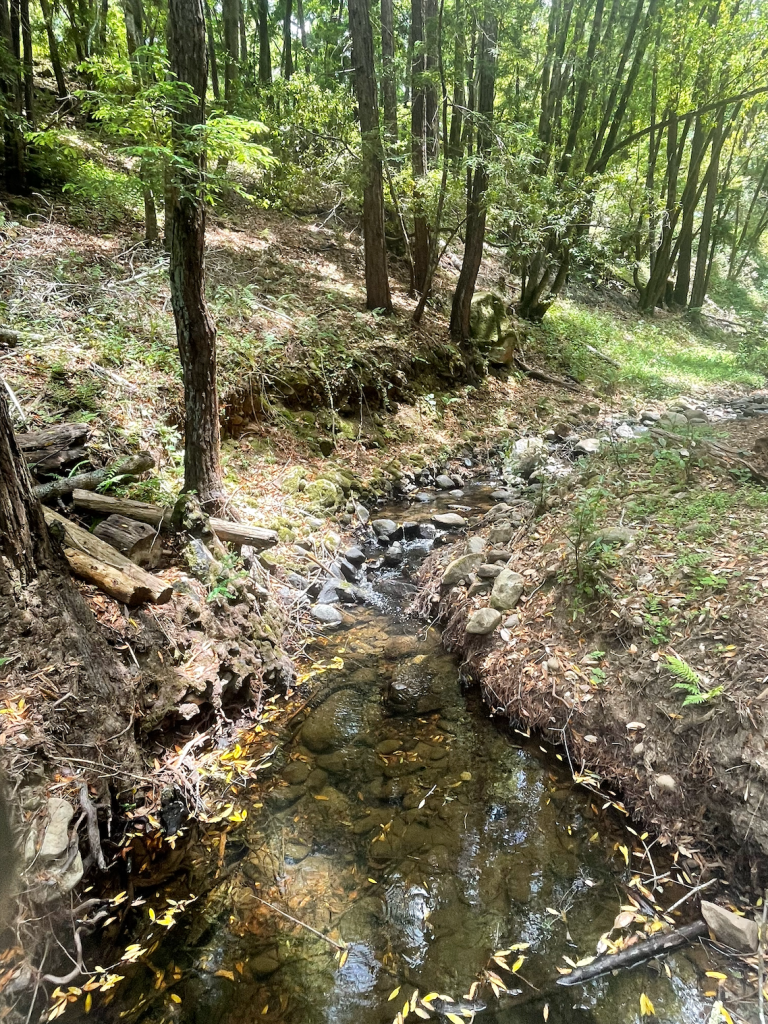
Photo by Marty Dreher, FCCPA Member/BANAP Volunteer
 BANAP
BANAP 